Advertise

"Please stop Crony capitalism-nization in Myanmar Now!"
 
Showing posts with label NEWS. Show all posts
Sunday, August 14, 2016

Burma Constitutional Conference (Videos)

0 comments
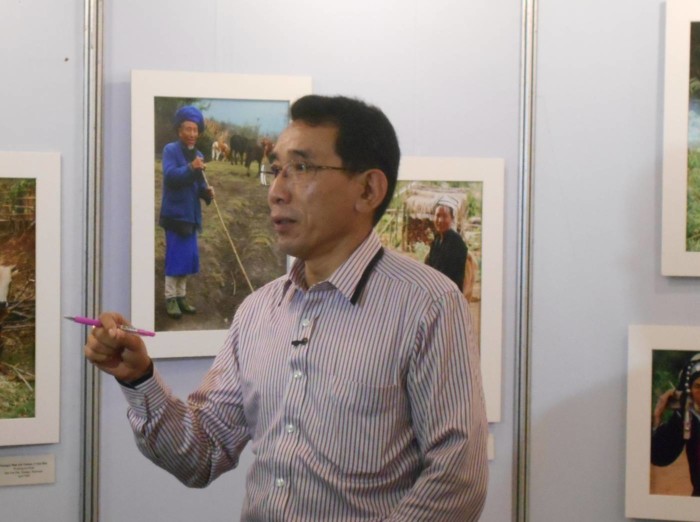
Burma Constitutional Conference held in London,discussion is in Burmese.U Aung Htoo, the General Secretary of Burma Lawyers' Council discussion on "2008 Constitution" 

The international community, as well as the majority of people in Burma, has an expectation to transform the country from the rule of dictatorship to democracy by peaceful means, including political dialogue. The National League for Democracy (NLD)has repeatedly called for unconditional dialogue, based on principles of mutual respect and national reconciliation. More importantly, it is also time to observe how peaceful democratization of Burma can be achieved in a way that criminal accountability is sought while laying down a foundation for the rule of law, for long term protection of human rights.

Daw Aung San Suu Kyi, Democratic and Ethnics groups say NO to 2008 constitution and 2010 election. There are very concrete reasons;

1.1990 election results are still pending to be honored 

2.Daw Aung San Suu Kyi and thousands of political prisoners still in the prisons 

3.2008 Constitution is designed to perpetuate military rule and adopted unilaterally 

4.Military will seat for 25% of parliament automatically 

5.Junta gives itself amnesty 

6.Does not respect ethnics rights 

7.2010 election will be held in accordance with 2008 constitution 

For more information please contact:

Burma Democratic Concern (BDC)
00-44-208 4939 137
00-44-787 7882 386
info@bdcburma.org
myothein19@gmail.com

http://www.bdcburma.org
http://bdcburma.wordpress.com/
http://bdc-burma.blogspot.com/
http://www.gcast.com/u/bdcburma/main
http://www.youtube.com/user/bdcburma
http://www.facebook.com/home.php?#/gr...

                                Burma Constitutional Conference (Discussion 1)


                                Burma Constitutional Conference (Discussion 2)


                                Burma Constitutional Conference (Discussion 3)


                                Burma Constitutional Conference (Discussion 4)


                                Burma Constitutional Conference (Discussion 5)


                                Burma Constitutional Conference (Discussion 6)


Read more...
Friday, August 12, 2016

Learning to share A bout low hanging fruits

0 comments
Day Four. Friday, 5 August 2016

A person with sweet mouth but sour bottom

One ought not live with such in the same house

(Shan proverb)

Has the peace process proceeded in strikes since the new NLD government took over? That’s the question the workshop tries to answer today.
First, the positive developments:
  • It has promised a federal democracy plus amendment of the military drawn charter
  • It is trying its best to include the 13 non-signatories armed movements in the upcoming Union Peace Conference, renamed Union Peace Conference (21st Century Panglong).
Through the new government’s efforts, the United Nationalities Federal Council (UNFC), an alliance of 9 EAOs (some say only 7) appears to have accepted the government’s invitation to attend the Framework Review meeting, due 12-13 August, in Rangoon. The 3 excluded movements (Arakan Army, Myanmar National Democratic Alliance Army, and Ta-ang National Liberation Army) are negotiating with government representatives a public statement acceptable to both sides, after which they would be invited to join the UPC-21 PL. (There were reports that negotiations broke down while this report was being filed) The National Democratic Alliance Army (NDAA), a non UNFC group, has already accepted Naypyitaw’s bid to attend the Framework Review meeting. The United Wa State Army (UWSA), regarded as the strongest non-state rebel group, is also expected to join the UPC-21 PL on 31 August , if not the framework meet.
thesetuppeace
 At the same time, the workshop also points out that all these developments have come out at the expense of the Nationwide Ceasefire Agreement (NCA) that was signed in October and ratified by the Union Parliament in December. “There was no need to bypass the NCA,” one comments. “The government could have achieved the same result by simply implementing the guidelines laid out by it.”

According to the NCA the Joint Implementation Coordination Meeting (JICM), composed of representatives of the signatories, is the highest decision making body.
The Joint Ceasefire Monitoring Committee (JMC), that deals with military matters, and the Union Peace Dialogue Joint Committee (UPDJC) that deals with political matters, which include drafting/amending the Framework for Political Dialogue, managing political dialogues and holding the UPC, are formed by it.
The following are some, if not all, of the workshop’s observations:
  • The formation of the UPC-21 PL Preparatory Committee, ostensibly to convince the non-signatories to join the process in April. “The UPDJC could have done it just as well,” says one participant.
  • The dissolution of the UPDJC made up of 16 members each from the government, political parties and signatory EAOs, formed under (not by) the previous government, to appoint a new one headed by the State Counselor Daw Aung San Suu Kyi, by the President.
“The UPDJC, as well as its chair, should be appointed by the JICM, if we play by the rules,” says another participant.
  • The 16 members from the political parties, also under the previous government, were chosen by the parties themselves, following the principle of inclusivity, as enshrined in the NCA:
National League for Democracy                                                 2 members

Union Solidarity and Development Party (USDP)                         2 members

Shan Nationalities League for Democracy (SNLD)                        1 members

Arakan National Party (ANP)                                                     1 members

United Nationalities Alliance (UNA)                                            1 members

Nationalities Brotherhood Federation (NBR)                                1 members

Federal Democratic Alliance (FDA)                                             1 members

Other Burma Proper parties                                                      3 members

Other States parties                                                                 4 members

“The government now says only elected parties are eligible, despite Article 22 pointing out clearly that they must be Tayawin (legal registered) parties,” an unhappy politician had told SHAN.
  • “The form adopted under the previous government wasn’t perfect,” he continued. “Because there was little time to hold a prolonged debate. But it closely followed the principle of inclusivity.”
Another politician explained how the political parties bloc attending the UPC had chosen its 150 representatives quota:

92           representatives from 92 registered parties

22           representatives, one each from elected parties

16           representatives chosen to the UPDJC

8              representatives, chosen as advisors to the UPDJC

12           representatives, one from each of the 13 parties elected to the Union Parliament (the USDP decided to forgo its right)

The government now says unelected parties should join the CSO Forum due to be formed in the unspecified near future. “This really is an outrage,” the first politician had exploded. “The government promised it would adhere to the NCA. It’s time to prove the deed goes with the words.”
  • Last but not least, the JICM has not been called since the new government took over. “Without the JICM, everything being done is illegal,” comments an EAO leader.
It seems, they say, negotiating with the elected government is tougher than negotiating with the USDP government set up by the military.
“The Thein Sein government had questions of legitimacy,” explains an academic. “So it was forced to make allowances, such as slackening the rules on the media and the political parties and initiating negotiations with the EAOs, in order to boost up its legitimacy. But the NLD doesn’t have such problems, if you overlook the fact that in most constituencies in states like Chin it had won by securing only about 20% votes (there were 12 Chin parties entering the fray).”

In addition, technical problems like lack of experience, inclination for formal  negotiations, and slow communication lines, both within and without, have been dogging the government’s negotiations, unlike under U Thein Sein.

No doubt, the government side has a lot of complaints against the EAOs too, like no longer having practically a single communication line as it did before they split into signatories and non-signatories last September.

The participants’ conclusion is that, first and foremost, both sides must return to the NCA, the only bond between the two sides, without which the peace process will become dangerously anchorless.

“You can look the other way once and it’s no big deal, except it makes it easier to compromise next time, and soon all you’ll be doing is compromising because that’s how you think things are done, “Jack Bauer, the character played by Kiefer Sutherland, tells his colleague in the popular TV series, 24, on corruption. “You knew these guys I blew the whistle on. You think they were bad guys? They weren’t. They were just like you and me, except they compromised once.”

Naturally, the next conclusion is to decide how it should be made known to the government side, ASAP. But that is another day, and another story.

Copy@
 http://english.panglong.org/2016/08/12/learning-to-share-a-bout-low-hanging-fruits/
Read more...
Friday, August 5, 2016

Myanmar Must Free Political Activist

0 comments
 
Khaing Myo Htun, a member of the Arakan Liberation Party (ALP) and prominent environmental activist, was arrested last week.
contact:


Hanna Hindstrom, Myanmar Campaigns Coordinator at ERI (English)

Email: hanna@earthrights.org

Tel: +95 (0)9976301937

Oo Kyaw Thein, Bertha Legal Fellow at ERI (Burmese, Rakhine, English)

Email: ookyaw@earthrights.org

Tel: +95 (0)9421720170
August 04, 2016, Yangon, Myanmar


The Myanmar government should immediately free political activist Khaing Myo Htun and investigate allegations that the army has committed abuses against civilians in Rakhine State, EarthRights International (ERI) said today.

Khaing Myo Htun, a member of the Arakan Liberation Party (ALP) and prominent environmental activist, was arrested last week accused of sedition and incitement under Myanmar’s draconian penal code after implicating the army in crimes against humanity and forced portering of civilians in the Western State.

ERI believes that these charges are politically motivated and being pursued to deter activists from probing ongoing human rights violations in Myanmar’s ethnic minority states.

“The army has once again demonstrated its ruthlessness and unwillingness to change by going after activists who dare to expose its abuses, despite the introduction of a new democratic government,” said Ka Hsaw Wa, co-founder and Executive Director of ERI. “Instead of prosecuting an activist fighting for social justice, the government should immediately launch an independent inquiry into these allegations of army misconduct in Rakhine State.”

“It is disgraceful that human rights activists continue to be persecuted for exercising their democratic rights in a country led by a former prisoner of conscience.”

The ALP provoked controversy in April when it published a statement accusing the Myanmar army of violating the Geneva Conventions by targeting civilians for forced portering and torture, warning that this could unravel the peace process. Khaing Myo Htun was subsequently charged under section 505(b) and 505(c) of Myanmar’s colonial era penal code – for sedition and incitement respectively – although his name did not appear on the statement. The charges were filed on 5 May by Lt-Col Tin Naing Tun, a staff general (grade 1) from the Sittwe-based Regional Operations Command.

Khaing Myo Htun later missed two court hearings because he was traveling and did not receive his summons, resulting in a warrant being put out for his arrest.

ERI has reviewed the audio and video evidence backing torture and forced portering allegations against the army and has deemed that they are credible. Similar abuses have been documented by other human rights monitors. The organization will be helping Khaing Myo Htun with his case, which appears to be linked to his political and social activism.

“Khaing Myo Htun is well known for his outspoken criticism of the military and unscrupulous corporations operating in Rakhine State,” said Oo Kyaw Thein, his lawyer and a Bertha Fellow at ERI. “It appears that he is being targeted as much for his advocacy on human rights and the environment as well as his political work. The charges against him have no grounding in the law.”

Khaing Myo Htun is a former student at the EarthRights School for human rights and environmental activists in Chiang Mai, Thailand. He is a committed campaigner, having worked with Arakan Oil Watch before co-founding Natural Resources for the People and becoming a board member of the Arakan Natural Resources and Environmental Network.

He later joined the ALP as deputy-spokesperson for the Information and Organizing Department. Its armed wing, the Arakan Liberation Front, was one of eight signatories in last year’s nationwide ceasefire agreement.

The National League for Democracy (NLD), which formed the country’s first democratically elected government in 60 years in April 2016, has pledged to free all political prisoners in Myanmar. But dozens of activists remain incarcerated and the ruling government has yet to adopt a comprehensive definition of the term ‘political prisoner’.

In 2013, ERI assisted another alumni and women’s rights campaigner, Khin Mi Mi Khaing, while she was on trial for staging a peaceful protest against land grabbing in Bago. She was eventually released after a long and high-profile court case.

“Fear, rights and truth [are] very interconnected,” said Khaing Myo Htun, speaking in a video filmed for ERI’s Faces of Change series. “To overcome the fear we must know our rights. One day when we know the truth and our rights, we will no longer have fear.”

His next court hearing is on Friday 5 August, when he hopes to be granted bail on medical grounds as he suffers from a weak nervous system and requires daily medicine.
Read more...
Thursday, July 28, 2016

Ethnic Armed Group Leaders Discuss Formation of a Burman State

0 comments
The Mai Ja Yang ethnic armed groups summit, pictured on its second day, Wednesday, July 27, 2016. (Photo: Hein Htet / The Irrawaddy)
MAI JA YANG, Kachin State — On the second day of a summit in Mai Ja Yang, Kachin State, ethnic armed group leaders discussed a draft constitution which proposes a single Burman state within a federal union.
Currently, Burma is made up of seven ethnic states—named for the Chin, Kachin, Karen, Karenni, Mon and Shan—and seven divisions. The proposed change is to combine three of these divisions—in which the majority population in most regions is thought to be Burman—to form a single Burman state. Ethnic minority leaders believe that this will foster more equitable political representation and sharing of resources.
While data from the 2014 census on the size of Burma’s ethnic populations has yet to be released, Burmans, or “Bamar,” have long been considered to comprise around 60 percent of the national population.
Nai Hong Sar, vice chairman of the ethnic armed group coalition United Nationalities Federal Council (UNFC), explained that ethnic minority leaders have difficulty accepting the current constitutional allowance for Burmans to retain political “control” over seven regions in the country and be allocated what he says are a larger share of resources.
“They [the Burmans] get seven kyats, but our ethnic group has only one state and we will get only one kyat,’’ he said, in an allusion to the famous remark by Gen Aung San in 1947 to the effect that if Burmans received one kyat, ethnic minority groups would receive the same. ‘‘Therefore, we cannot accept their constitution,” Nai Hong Sar added, explaining how he feels the controversial 2008 Constitution marginalizes ethnic minorities.
“Based on our current draft, Mandalay, Magwe and Pegu [divisions] will become a state for Burmans,” he said, adding that, “We all should all be equal.”
Ethnic armed group leaders adopted a draft federal constitution in Feb. 2008, after forming the Federal Constitution Drafting and Coordinating Committee (FCDCC). Burma’s current constitution—also ratified in 2008—was written by the country’s former military government and ratified by a nationwide referendum widely considered fraudulent.
The constitution has been extensively criticized for entrenching the armed forces’ presence in the legislature, for barring now-State Counselor Aung San Suu Kyi from the presidency, and for granting little autonomy to ethnic states.
Burma’s seven divisions are listed in the 2008 Constitution as Rangoon, Sagaing, Magwe, Mandalay, Irrawaddy, Pegu and Tenasserim. The FCDCC recommends that Rangoon, Sagaing, Tenasserim and Irrawaddy divisions—which have large ethnic minority populations—instead become what they term as “nationalities states.”
Nai Soe Myint, a senior leader from Mon National Party agreed with the proposed change. “For example, the ethnic Chin nationality lives [also] in Sagaing Division. The division does not only have Burman people. This is why we will call Sagaing a ‘nationalities state,’” he said.
Gen Bee Htoo, chief of the Karenni National Progressive Party and a senior UNFC leader, said that a federal system “based on nationalities” would solve many of the country’s problems stemming from what has long been perceived as Burman domination of political affairs, institutions and culture.
Not all were in agreement, however. The Restoration Council of Shan State—whose armed wing is known as the Shan State Army-South, and claims defend ethnic Shan interests—objected to the idea of Shan State being called a “nationalities state.” Shan State covers a large area of exceptional pluralism—in addition to the Shan it is home to considerable numbers of ethnic Palaung (Ta’ang), Pa-O, Wa and Kachin, among many other groups, and a significant population of Chinese descent.
Three groups absent from the meeting were the United Wa State Army, the Ta’ang National Liberation Army and the Myanmar National Democratic Alliance Army—all of which are active in Shan State, leading some ethnic delegates, including Bee Htoo, to recommend further discussion for a future “nationalities state” in the region. Other ethnic leaders present at the summit have suggested centering future talks around a “federal Shan State” instead, but clarified that such discussions remain in the early stages.
Naw Zipporah Sein, the vice chairperson of the Karen National Union (KNU), said that additional changes have been made to the FCDCC’s alternative draft constitution up through 2015.
“We will discuss and analyze the draft today. Then, if we need to, we could add more to it and approve it at this meeting,” she said on Tuesday at the Mai Ja Yang summit.
She added that the representatives from 17 groups present at the event would focus on discussing how to most effectively participate in the upcoming Union Peace Conference—slated to be held in late August in Naypyidaw.
“It is important for us to establish common ground,” Zipporah Sein said. “One group alone cannot build a federal union, or peace. We will only succeed in reaching our goal when all groups are included: political parties, democratic forces, and our armed forces,” she said.
The UNFC’s Nai Hong Sar said that current events have forced the Burma Army, which has long opposed the political aspirations of ethnic nationalities, to be more open to their demands.
“In the past, the Burma Army was opposed to federalism, but not anymore—they accept it now. They are worried that our ethnic groups will secede from the country. But no one is asking to secede—we just ask for our future federal system to have democracy, equal rights and self-determination. We just ask for this,” he said.
This article has been slightly amended to include the reference to Gen Aung San’s 1947 remark on Burman/ethnic relations.
Read more...

Myanmar rebels hold rare meet as Suu Kyi yearns for peace

0 comments
Flags of ethnic armed groups


MAI JA YANG (MYANMAR) (AFP) -  Leaders of Myanmar rebel armies held talks in a war-hit border town Wednesday, state media reported, as they prepare for a major peace conference with a government desperate to end insurgencies that have plagued the country.

Myanmar has been racked for half a century by ethnic rebel wars in its resource-rich frontier states, leaving tens of thousands dead or displaced.

Some groups have signed ceasefires but several other rebel armies are still fighting the nation's army -- including in the northern state of Kachin, where Wednesday's talks were held.

Aung San Suu Kyi, the democracy activist leading the country's first civilian government, says ending the fighting is essential if Myanmar is to rise from the ashes of junta rule.

She wants to restart full peace talks within weeks.

This week's summit, held in a Kachin town ravaged by years of warfare, brought together "leaders representing 17 ethnic armed groups to search for common ground in working toward a federal system for the country", state-run Global New Light of Myanmar reported Wednesday.

The negotiators, many sporting traditional clothing, gathered in a hall in Mai Ja Yang, a town ringed by displacement camps on the border with China, which also sent an envoy to the talks.

Peace is hard to secure.

Distrust in the still-powerful military runs deep and the rebel groups themselves are divided -- with four pulling out of the Mai Ja Yang talks at the last minute.

The conflicts are complex and fuelled in part by the illegal trade in drugs, timber and jade, much of which is funnelled across the border to China. Rebels use the proceeds to buy guns.

The former military-backed government launched a peace dialogue but failed to secure a nationwide ceasefire with all groups.

Suu Kyi has promised a greater level of federal autonomy in a bid to secure peace, but has yet to spell out how it would work.

It is a promise her independence hero father also made in 1947. It was ignored by the junta that took control several years after his assassination and ruled over Myanmar for almost 50 years.

Suu Kyi's ability to wrest a peace deal or decentralise the government will depend heavily on the support of the military, which remains a potent political and economic force.

It holds the keys to any charter changes, runs crucial government ministries and dominates the economy's most lucrative sectors.
© 2016 AFP
Read more...
Friday, July 22, 2016

Press conference reveals friction after state counsellor, UNFC meet

0 comments

The state counsellor called this week’s landmark meetings with ethnic armed group leaders “family-like”, but a press conference with a United Nationalities Federal Council delegation yesterday revealed a different picture: At least one of the armed groups’ leaders left the talks dissatisfied.
Khu Oo Reh, general secretary of the UNFC, a bloc of nine ethnic armed groups, said he was displeased with remarks made by Daw Aung San Suu Kyi.
According to him, the state counsellor told UNFC leaders that they should consider what they can offer rather than what they want to demand.
“She said, ‘You can demand everything you like. But, I do not guarantee every demand will be met.’ She previously said that people should consider what they can offer for peace rather than what they want to obtain from it,” Khu Oo Reh said at a press conference held yesterday, becoming emotional as he described the exchange.
“Look at the states inhabited by the ethnic people. We have lost almost everything,” he said. “In this situation, what do they want from us? What do we still have left to offer?
“We do not have demands and offers. Everyone has a responsibility to make the country more developed and peaceful. This is the equality that we have been demanding for decades,” he said.
The anger was not expressed during the “time-limited” talks with the state counsellor, and Khu Oo Reh added that he did not want to “create tension” during the meeting.
Earlier in the press conference, he said that the UNFC delegation represented seven armed ethnic groups. When The Myanmar Times asked why two armed ethnic groups were missing from his count, he backtracked, and said the bloc includes nine members. The withdrawal of two UNFC members, ethnic Kokang and Palaung armed groups, was previously refused.
When asked about the only partial inclusivity of the upcoming 21st-century Panglong Conference, and the likely absence of some UNFC member groups – including the three allies fighting in Kokang, the Myanmar National Democratic Alliance Army, the Ta’ang National Liberation Army and the Arakan Army – he said the Tatmadaw had made it difficult for everyone to participate.
“We should question the military offensives on the other side of these armed ethnic groups. If the Tatmadaw halts its military offensive against them, then they would not fight back,” Khu Oo Reh told reporters yesterday.
The senior UNFC leaders urged the government to find ways to include representatives of armed ethnic groups with whom it has not held separate talks yet. Such groups include the Arakan National Council, the Wa National Organisation and the Lahu Democratic Union, which do not have standing armies, as well as the three Kokang allies.
“We think that there should be a formal understanding between the government and the armed groups before proceeding to reviewing the [peace talk] framework and the 21st-century Panglong Conference,” he said. “We urge the government to foster an agreement guaranteeing the participation of all groups.”
Government peace negotiators have invited UNFC members to attend the framework review scheduled for the first week of August. However, only the Union Peace Dialogue Joint Committee has the decision-making power to change the framework, which will determine the shape of the political dialogue.
“As we were not there during the drafting of the framework, we have to ask by what means some groups can participate in the review of the framework dialogue without signing the nationwide ceasefire agreement. We would also like to know what status will be offered to the groups,” Khu Oo Reh said.
The previous government excluded armed groups engaged in ongoing offensives from the NCA last October. Inclusion of the Kokang, Arakan and Ta’ang groups in the upcoming conference remains an open question.
“The state counsellor yesterday said that it was important for us to have the rule of law. Without the rule of law, there cannot be peace. We can have a strong and good constitution only if we have the rule of law and peace,” Khu Oo Reh said.
The charter was drafted by the former junta and was ratified in 2008. President U Htin Kyaw in his inaugural address to the nation in March said that the new government would prioritise reforming the constitution. But Speaker U Win Myint said in June that constitutional amendments are on the backburner until peace and national reconciliation are achieved.

Read more...

‘We Are Not Hardliners – We Are the Ones Who Want Peace the Most’: Khu Oo Reh, General Secretary of UNFC

0 comments
Khu Oo Reh is the General Secretary of the ethnic alliance United Nationalities Federal Council (UNFC) and the Vice Chairman of the Karenni National Progressive Party (KNPP). In this exclusive in-depth interview, Khu Oo Reh talks about the goals of the UNFC, the current state of the peace process and the NCA talks (Nationwide Ceasefire Agreement), as well as the role of the international community who are engaging with the Burma Government and funding the peace process through institutions such as the Myanmar Peace Centre (MPC). The views of the UNFC and ethnic armed organisations, who remain in desperate need of support in order to realise a lasting and sustainable peace, end up too often ignored, overlooked, or misunderstood by international actors. Khu Oo Reh strongly encourages the international community to listen to all sides in order to develop an understanding of the dynamics of the problems they are funding to solve.

Q: When and why was the UNFC founded, and what are the goals of the UNFC?
The UNFC was founded in 2011, just after the 2010 general election that we had in Burma. In 2009, the Burmese military regime forced all the ceasefire armed ethnic groups to transform their troops into Border Guard Forces, or local military militias. By the pressure given by the regime some ethnic armed organisations such as KIO, the Kachin Independence Organisation, New Mon State Party, Shan State Progress Party, and a few more, rejected to transform their troops to be Border Guard Forces or local militias. […] Such ethnic armed groups, who had been in ceasefire agreement with the military regime, returned to war against regime by joining hands with the other ethnic armed groups who were still fighting against the military regime, such as the KNU, Karen National Union, and Karenni National Progressive Party, and Chin National Front, and also the Palaung National Liberation Front. So such ethnic armed groups, who rejected to transform their troops into Border Guard Forces or local militias, got in touch with other ethnic armed groups, those who were still fighting against the military regime. And we came together, found the way to come together and work hand in hand to fight against the military regime. So we all agreed that by having a federal union that can guarantee democracy, equality, and self-determination, is the only way that we can stop all the problems that we have [had] in our country for over 60 years.
The main goal is to build a federal union based on democracy, equality, and self-determination. […] Within the UNFC we have a 12-member organisation plus four association member organisations, all together 16. Still the RCSS (Restoration Council of Shan State) and the UWSP (United Wa State Party), remain outside of the UNFC, but we have a mutual understanding. We work together on some major issues.

Q: How would you describe the current state of the peace process and the NCA?
Now [we are] ready for political dialogue, as we try very hard to conclude the nationwide ceasefire agreement with the government. We try very hard to come together, but there are still [some groups that are] out of the UNFC, some organisations are still not members of the UNFC. […] … they also should be part of the process, that’s how we understand. So no matter what, how we are, we should have a common goal, and a common position and working together and build our unity. We view that before we go for political dialogue, first we have to stop all the fighting. If we cannot stop the fighting we cannot smoothly move onto political dialogue. So we all agree that we should stop the fighting first and then move onto another step, because we really want to make sure there is no more fighting in all of the country, the country is in peace. So that is the reason that all the members of the UNFC and non-member organisations came together and worked together on the peace process.
[…] Now we are trying very hard to be there [to have NCA], but we still have some serious issues that need to be agreed with the government, for example [1] the inclusiveness. To be honest we really want to see all the armed ethnic groups come together and sign the NCA. Another thing is [2] who is going to sign the NCA, we still need to agree on that […]. And also at the signing of the NCA, we want to see [3] the international witnesses to be included. We propose UN, ASEAN, EU, and some neighbouring countries to be as witnesses to ensure that whoever comes into power [after the forthcoming elections] implements the agreement and also the process of the NCA is monitored. Who is going to monitor, if we fail to implement the agreement? So such important issues still remain to be agreed on.

Q: Why is the government trying to exclude the three groups TNLA (Ta’ang National Liberation Army), MNDAA (Myanmar National Democratic Alliance Army), and AA (Arakan Army) from the NCA?
Their reason is that those groups such as MNDAA, AA, TNLA, still not yet have bilateral agreement with the government, so first they have to enter into bilateral agreement with the government, and then later on they can join the NCA. That is the reason [put forward] by the government.
…for TNLA they said that they are ready to join with the others to sign the NCA at any time. At the same time they are also ready for talks with the government individually as well to reach a bilateral agreement as soon as possible. But the Burmese military must stop all their military operations in the area first. If they (the Burmese army) are still fighting the group (TNLA) it is hard for them to believe in the government for talks.

Q: Why was the new Senior Delegation (SD) formed to replace the NCCT?
Because the NCCT (Nationwide Ceasefire Coordination Team) has repeatedly said that they tried their best to negotiate with the government. It is the upmost effort that they could make, no more beyond that, but some issues still remain to be discussed and agreed on. So for those remaining issues the NCCT thought that there should be another new team that can continue the negotiations with the government to be able to finalise this agreement.

Q: What do you expect from the forthcoming general election?
[…] It is the work of the political parties, not for us, but we have a clear stand for the general election. We won’t stop or disturb the election process. It can freely go as it is, but we foresee that even at this timethere cannot be free and fair election as far as we have seen the scenario of the activities by the USDP (Union Solidarity and Development Party) and by the [Burmese] military, and also since the military representatives at the parliament rejected to amend the constitution. So we won’t see free and fair election, again. So, even though we will still have to negotiate with the new coming government, whether they are new faces or old faces, we don’t really know… We don’t know. But we have to continue our talks with them. If we can conclude the NCA before the election, we still have to implement the agreement after the election with the new government, and also to discuss about the framework for political dialogue. There is still so many agenda and problems [that] remain ahead. So we expect to see more challenges.

Q: What is the UNFC’s position regarding the 2008 Constitution?
We never talk about the 2008 Constitution, we are thinking to have a new one, which could be agreed by all, the entire population in the country. Because our main goal is to build a federal union based on democracy, equality, and self-determination. So when you carefully study the 2008 Constitution they have now … we better have a new one.

Q; The UNFC aims to build a federal army. What is your vision for the federal army?
When federal union is materialised that we are aiming for, under the federal system we should have a federal army, as we do have a federal government. Within the federal army, all ethnic living in the country should have an equal right to get involved, and participate, and join the position that they deserve. When you look at the Burma Army that we have now in the country, all the senior commanders are Burman, and also Buddhist. If you are non-Burman ethnic you cannot enjoy a higher position. […] So we feel it is very unfair.
We are not asking to found a new army, but just to restructure the army that we have in Burma. One army for all, the whole country. No matter [whether] you are Karenni, or you are Shan, you are Burman, we all can enjoy the same rights, the same equalities.

Q: What is the UNFC’s stance regarding a SSR (Security Sector Reform) and DDR (Disarmament, Demobilisation, and Reintegration)?
It heavily depends on the NCA agreement that we will have; how much the agreement can guarantee for ethnic armed groups. Let me say that after signing of the NCA, if we don’t see any concrete guarantee, or, if we don’t see any promise that could materialise, we will be worried to have SSR or DDR. So it very [much] depends on the NCA that we are going to sign, how much the agreement will guarantee for us.
Because we worry, if there is no concrete agreement or guarantee for us, if we fail to have political dialogue it will be a big danger for us to go back to war once again. Or it will be big challenge how to disarm, or accept the DDR or SSR. But we do understand that for Burma Army and the government, after signing the NCA, they really want us to be ready for SSR and DDR, at any time.

Q: How does history influence the way that ethnic armed organisations feel about this?
We are still not ready for that, because we [are] used to feeling that we are not safe now. So we are worried for our self-defence because of the promises that have been broken [by the government] for several times before.

Q: Does the UNFC consult civil society and groups like women’s organisations and refugee representatives about how to proceed with the peace process?
Well we are seriously thinking about the role on the CSOs (civil society organisations), and women, and youth. […] What support they can give, in which way they can help? Because we understand that when the talks for political issues come, they have to get involved.
Now the negotiations that we have with the government and the army are just to stop the fighting, but … there are some other issues to be guaranteed when the political dialogue comes. For example, the role of the political parties and the role of the CSOs, women, and youth. Particularly women’s participation in the process, at the political dialogue. And also if we are going to talk about environmental issues, natural resources or education or health and human rights. So many issues need to be addressed, so those, no matter [whether] they are youth or women or CSOs, they need to represent the issues and address [them] at the talks. So now we UNFC encourage youth, women and CSOs to closely work with us.

Q: In the Law Khee Lah Summit, did the UNFC agree to have 30% women at all levels of talks?
Even [though] we agreed, whether fully 30% can get involved in all levels of talks or making decisions, or making policy or not, it depends on them (the women).
If they are qualified to be in the leadership, we have no objection. At the policy making level, decision making level, and so on, it depends on their knowledge and their abilities, and their experience. We have no discrimination on that, we have no specific criteria for that. No matter [whether] you are a man or woman, if you deserve any position that’s where you will be. For example, the KNU Vice Chairwoman [Naw Zipporah Sein] is a woman, because KNU members think that she deserves that position. The same way within the UNFC, if your own organisation nominates you as their organisation representative to the UNFC, if you qualify to be in one of the higher positions within the UNFC, and all eligible representatives vote for you for that position, finally you are there.

Q: Currently the international community is supporting the peace process mainly through institutions such as the MPC [set up by the government]. What is your view on these peace funds and they are benefiting the peace process?
My observation on the international involvement, also the donor countries [is that] from the very beginning they have [had] the wrong mind-set, they have [had] the wrong thinking about the process that we have now. When they are coming to Burma with the funds in support of the peace process, how they have so far understood is just mainly to engage with the government. [They are] just engaging with the [Burmese] military who has power to manage everything, who has the power to say whatever they want. So they only have one ear [for] listening to the government, listening to the [Burmese] army.
But they don’t care much about the ethnic, they all are intentionally trying to ignore the ethnic. Even [if] a few donor countries are thinking of giving a helping hand to ethnic groups, they are reluctant to do so because the majority [of the] donor countries are mainly happily working with the government through MPC or through other channels. But the problem that we have in the country, without ethnics there can be no peace at all in the country, believe me. If we don’t come for talks with the government and the army, the problems still remain huge. Without the government, peace cannot come in the country either, because all the problems [that] we have in the country are problems of us, all of us, not only the ethnic. That is the reason [why] the government and the army decided to talk with us and we agreed to talk with them, to solve the problems in the country. As the government and the army are in need, we are also in need. The need is huge, so big, and the resources that we have in our hands are not enough, so we do really need it, international support, financially, technically.
So the international community and governments have to come up with their own decision, ‘how should we approach the problem, how should we approach the process? How should we provide our support?’ There should be such a clear agenda. Beforehand, they should have all the information that they need … before they give their support. To truly bring about peace in our country.
But so far, as far as I have seen and I feel, the majority of international community and countries only have one ear. [They] heavily depend on the government and have very little access to ethnic. When we talk about this, they still disagree, they still argue that ‘oh no, no no no, the majority of our support, our funds go to the ethnic areas, very little to the government.’ It is not true. But one thing I can agree with is [that] so many INGOs’ staff officers are coming to ethnic areas, right? But we are still wondering what they are doing there? In three years’ time, we didn’t see any progress, [and] we still don’t see any change, but we understand [that] they have already spent huge amount of money that they have brought from their country. But we also don’t know, where all that money goes? Only the people who engage in their activities will know. ‘Please have a fair treatment, have a fair view, on all sides. And also reach to the ground situation, and find out what the real needs are, and also who are in the situation.’

Q: In your view, if the international community wants to support the peace process, what would be the best way to do that?
Before deciding to deliver support or assistance, first they should access all groups of people in the country, they should access all groups who are in the process, and listen to them. And then gather all their points of views, all their needs, and talk with them, which way is the best to give out the assistance.
Because the government used to say that ‘oh all these ethnic armed groups are still outlaw organisations, unlawful organisations, so you should not give out any assistance to them.’ That is what the government said to all international communities and governments. And also the international community and governments have their say as well. So if they still have such a view on us, how can you bring about peace? How can you solve the problem? If you don’t have a fair treatment, if you don’t have a fair view, if you don’t have fair judgement, all the problems cannot be solved peacefully.
If they see the government that we have now as the only legal organisation, legal body, who are running the country, how did they come to power? You can ask all the voters, during the general election, whether all the voters, eligible voters, freely had the right to vote for them or not. No! Everybody knows it, no doubt at all, that’s how they came to power. So we should recognise that as a legal government? That is the main reason that we still don’t trust them, and still remain taking up arms to fight against them, not to win them, [for] a solution. The result that we want to see is a win-win solution. No one to win another, to have a fair position, to have a fair say. That’s all.

Q: What would you like to say to the international community?
Firstly I would like to thank all international governments and communities who are giving a helping hand to us in all ways that they can help. I do truly appreciate that, no matter what. But, in the long run, some have their own interests and some have their own national interest. I’m not in a position to blame them. Only one message that I would like to give is ‘before coming into the country with the interest of giving support to the people in the country, please try to understand the situation, please try to reach out [to] as many people as you can. And come up with your right decision, and making sure that all your assistance goes to the right place, goes to the needy people, truly benefits the people, and truly benefits the whole country.’ […] ‘So don’t only talk to one side, but talk to all sides. Don’t listen to one side, but please listen to all sides. And come up with your own judgement. Whether you do right or wrong, it is in your hands.’ The resources that we have in our hands are not enough to bring peace in the country, so we do understand well, [that] we truly need outside assistance and help.’
[…] We are not hardliners, we are not hard. We are the one who need peace the most. Nobody wants to suffer, nobody wants to be poor, you see? Everybody wants to be free.
Ariana Zarleen / Mizzima | August 3, 2015

The interview was conducted by Ariana Zarleen at the UNFC office in Chiang Mai on July 24, 2015. Ariana Zarleen is a co-founder and current Program Director of Burma Link, an NGO that spreads awareness of Burma’s ethnic nationalities and displaced people, and shares their voices and stories locally and internationally.
Read more...
 
ETHNICS VOICE © 2011 ETHNICE VOICE OF MYANMAR & Main Blogger. Supported by ETHNICE VOICE OF MYANMAR

WELCOME TO YOU FROM OUR BLOGSPOT