Discuss Formation of a Burman State
State Counsellor of Myanmar Aung San Suu Kyi
Press conference reveals
call for army to withdraw
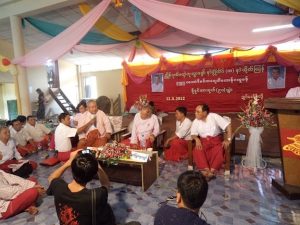
Discuss Formation of a Burman State
In the past, the Burma Army was opposed to federalism, but not anymore—they accept it nowMore
The Union Peace Conference as it is now called -- previously dubbed the 21st Panglong
Planned "Panglong" peace summit at the end of August...More
We do not have demands and offers. Everyone has a responsibility to make the country more developed..
We have to ask by what means some groups can participate in the review of the framework dialogue without signing the nationwide ceasefire agreement..More
Kachin civil society groups call for army to withdraw
The attack prompts the question from civilians whether the Tatmadaw (Burma Army) wants peace or not...More
Showing posts with label MON. Show all posts
Sunday, January 11, 2015
NMSP urges Gov’t to willingly implement the peace process
The New Mon State Party (NMSP), along with other ethnic groups, wants to achieve peace in Burma. In a recent meeting with President U Thein Sein and Army Chief Senior General Min Aung Hlaing, NMSP representative [Nai Hongsar Bonkhine] urged the government to employ patience while willingly implementing the peace process.
Read more...
Twelve ethnic armed groups invited to observe an army parade at last Sunday’s Independence Day celebrations, marking the 67th anniversary of Burma’s independence from the British, met with President Thein Sein at 9 AM on January 5th at the Myanmar International Convention Center (MICC-2), according to NMSP representative Nai Hongsar Bonkhine.
“We ethnic groups really want peace, so, Mr. President [and the government] side needs to carry it out. Everyone should work for a nationwide ceasefire accord, political talks and a federal democratic country,” said Nai Hongsar Bonkhine.
According to State media, at the January 5th meeting President Thein Sein stated, “It is important that [a] nationwide ceasefire accord is signed, in order to find [a] solution for political talks. As it already exists, it must be acknowledged by one another. The talk must be carried out [based] on respect, transparency, and honesty.”
According to Nai Hongsar Bonkhine, when Army Chief Senior General Min Aung Hlaing met with the ethnic armed groups at Bayin Naung Retreat Hall at 11:30 am on January 5th, NMSP representative [Nai Hongsar Bonkhine] requested that the General employ patience while willingly implementing the peace process, just as he had urged the President.
As reported by State media, when Senior General Min Aung Hlain met with ethnic armed group representatives, the General stated that, “to enable [a] [united] nation, which is formed with states and divisions, [to stand] in the center of the world gloriously, every ethnic group has [a] responsibility for [this goal]. [The country] is still walking on the route of multiple parties, elected by the people, not by the Tatmadaw (Burmese Army), but by the people, with their desires and wishes. So, it is necessary [that we] walk along that road. If not, [Burma] will be left behind. [We] will be left behind if [we do] not walk the democracy route, and carry out our [democracy] in accordance with the law. While walking, [we] must know the objectives and aims, [and] we should walk with a true heart.”
On January 5th the President and Army Chief met with representatives from twelve ethnic armed groups, including the Karen National Union, the United Wa State Army, the Shan State Army, the Pa O National Liberation Organization, the New Mon State Party, and the Democratic Karen Benevolent Army, as well as other representatives from respective organizations working for the restoration of peace.
http://monnews.org/2015/01/07/nmsp-urges-govt-willingly-implement-peace-process/
Wednesday, December 10, 2014
Plan to Support Mon Teachers’ Salaries Proves Successful
The Mon Social Development Network (MSDN) and the Mon National Education Committee (MNEC) report that projects implemented to help support the salaries for Mon School teachers have been successful.
Read more...
“Last year we stated [the project] with a[n initial] capital of more than 30 million kyat for 19 schools. It was just a [pilot program] but, after 18 months, we gained around 10 million kyat in benefits, [allowing us to] provide pay-raises for 96 teachers,” said MSDC secretary Nai Minn Minn.
The MSDN and MNEC launched the pilot projects in 2013, with an initial capital of 10 million kyat for seven schools based in Aunden Village in the Par-lain area of Ye Township. The Mon organizations also provided 5 million kyat for three schools in Kawdut Village, Lamine Sub-Township; 6 million kyat for five schools in Pa-nga Village, Thanbyuzayat Township; 6 million kyat for three schools in Kamarwet Village, Mudon Township; and 5 million kyat for Winkabar High School in Kyarinnseikkyi Township.
“We [conduct] field research at the schools that need support. The schools submit a proposal to the specific project that fits with what they want to do, and what their village wants. We then make analysis [as to] whether their projects will work or not. Then, we submit the [potential] project to the donors,” said Min San Ni, secretary of the salary-raising project implementation committee.
The MSDN and MNEC initiated pilot projects with the support of SEED, an international development organization based at the British Council in Rangoon.
The pilot project is based on the initial capital, and any profits from the project are allocated to further support Mon teachers’ salaries.
“With the initial capital, we invested in buying chairs and tables. Since August [2013] we [have] rented the chairs and tables to locals for wedding ceremonies, donation-offering events, ordination ceremonies and other festival events. When we completed the project in November, we had received more than 2 million kyat,” stated the chairman of the school secretary of Pa-nga Village, Thanbyuzayat Township.
According to Min Phone Myint, School Committee secretary for Kamarwet Village, Mudon Township, the Kamarwet committee has also received profits of 3 million kyat.
“We have sixteen teachers for three schools in our village. Our committee is able to support them with more than one hundred thousand kyat per teacher,” said Min Phone Myint.
Nai Min Min continued that on December 5th, the committee provided 15 million kyat for eight schools in Ye-chaung-pyar area’s Win-zin Village, Dawei District, as capital to invest for the teachers’ pay-raise project.
Nai Min Min states that this year, the MSDN and MNEC also supported Mon schools in Pa-nga Village, Kamarwet Town, and Aunden Village, with initial capital of 1.7 million kyat, 3 million kyat, and 10 million kyat, respectively.
The Township Mon National Teachers Association was founded in 1972, which launched a grade-by-grade educational system in Mon schools. The Association then founded a small central education organization in 1984-85, and the Mon National Education Committee in 1993.
According to the MNEC, for this 2014-2015 academic year, there are 142 Mon national schools, and 107 integrated government schools, with 800 Mon teachers and more than 30,000 students.Mon teachers have generally received comparatively low salaries, with average salaries of 30,000 kyat per month
http://monnews.org/2014/12/08/plan-support-mon-teachers-salaries-proves-successful/Sunday, July 13, 2014
Four-Point Agreement Signed between MNP and Mon National Negotiating Team
![]() |
| copy of 4-point agreement signed at the meeting by All Mon national negotiating team and Mon National Party (Photo: IMNA) |
The four points agreed upon at Tuesday’s meeting include the formation and management of the MNP in accordance with the specific methods agreed upon with the negotiating team, including the party’s step-by-step and final formation; to draw-up the responsibilities and numbers of chairpersons and advisors, and officially recognize the formation of the MNP; for the party to use the new flag and logo suggested by Mon monks and the Mon people; and, finally, to continue to hold meetings with the All Mon National Negotiating Team if any matters arise concerning the previous three points.
Although the Mon Democracy Party (MDP) was approved to change its name to the MNP by the Union Election Committee in Burma’s Nay Pyi Taw capital on March 28, 2014, the party only re-installed new signboards at village-level, township-level and headquarter offices, and has yet to change the party’s logo and flag.
“We are planning to hold a [MNP] conference this coming January. The party’s constitution and laws will be recognized at the meeting and as recognized, the party’s flag and logo will be changed. At the moment, we are only changing new signboard of our party at respective offices,” said MNP’s Joint-Secretary 1, Dr. Min Kyi Min.
Dr. Min Kyi Min states that the MNP will hold a central conference to select party leaders after meetings are held in respective villages and townships. Dr. Min Kyi Min notes that the MNP has been training Mon youths and women to play a role in Mon politics.
“So,” says Dr. Min Kyi Win, “anyone who would like to become party members will take up from the beginning step [position].”
Ashin Kayma Nonda, Vice-Chairman of the All Mon National Negotiating Team, addressed the fact that input of Mon senior monks’ point of view is essential but, due to health problems, current senior monks should take chairmanship positions or act as advisors for the party, while the MNP Executive Committee (EC) should be include participation of Mon youths and women. The EC will designate 25% of its seats for Mon youths and another 25% for Mon women.
“For the MNP to represent the whole Mon [population], it must work with Mon youths and Mon women, and train them for leadership [positions],” highlights Ashin Kayma Nonda in an interview with IMNA.
The MNP and All Mon National Negotiating Team conducted an informal meeting on July 5th at Auk-Pagu Monastery in Moulmein, Mon State. At Tuesday’s conference, the MNP signed the four-point agreement before 85 monks and more than 200 patriotic Mon people.
http://monnews.org/2014/07/10/four-point-agreement-signed-mnp-mon-national-negotiating-team/
Thursday, June 12, 2014
Article 436 Amendment Campaign Set to Launch in Mon State
Khittar Non – June 14th will mark the start of a
campaign calling for amendment to Article 436, the constitutional clause
which effectively bars any reform of the constitution without full
military approval. The campaign is set to begin in the Moulmein Capital
of Mon State.
According to Moulmein campaign host Ko Kyi Zaw Lwin, several groups have come together to form a joint-committee to organize the campaign, including the Moulmein-district branch of the National League for Democracy (NLD), the 88 Generation Peace and Transparency Society Group, the Mon National Party (MNP), Mon State Student Unions, as well as local Moulmein-based society organizations.
“As a joint-committee”, says Ko Kyi Zaw Lwin, “They will give public speeches, not only in Moulmein Capital, but other [townships] across Mon State, too, to discuss how Article 436 should be amended.”
The Article 436 amendment campaign committee includes representatives from 10 townships throughout Mon State. The committee will organize campaigns, host public meetings, present public speeches, distribute pamphlets about the issue, and invite people to sign a petition calling for amendment of Article 436.
Ko Htay Kywe from 88 Generation Peace and Transparency Society Group, along with U Nyan Win and Daw Khin Htay Kywe from NLD will attend the public meetings and present public speeches.
According to MNP joint-secretary Dr. Min Kyi Win, the MNP has agreed to join the NLD, as offered, to call for amendment to Article 436.
“Our party has supported amendment to the 2008 constitution, and to [appeal] for people to sign the petition to call for amending Article 436, our party will join NLD”, said Dr. Min Kyi Win.
Ko Kyi Zaw Lwin notes that the MNP is invested in this campaign and the importance of calling people to sign the petition; MNP members in respective townships throughout Mon State will help organize this effort.
Public meetings, speeches, and campaigns for amendment of Article 436 have taken place in many townships and divisions throughout Burma.
As Article 436 requires at least 75% support of Union Hluttaw (parliament) representatives for any amendment to the constitution, followed by approval of more than half the voters in a nationwide election, it is necessary that this clause first be amended in order to allow further amendment of the 2008 Constitution.
Read more...
According to Moulmein campaign host Ko Kyi Zaw Lwin, several groups have come together to form a joint-committee to organize the campaign, including the Moulmein-district branch of the National League for Democracy (NLD), the 88 Generation Peace and Transparency Society Group, the Mon National Party (MNP), Mon State Student Unions, as well as local Moulmein-based society organizations.

“As a joint-committee”, says Ko Kyi Zaw Lwin, “They will give public speeches, not only in Moulmein Capital, but other [townships] across Mon State, too, to discuss how Article 436 should be amended.”
The Article 436 amendment campaign committee includes representatives from 10 townships throughout Mon State. The committee will organize campaigns, host public meetings, present public speeches, distribute pamphlets about the issue, and invite people to sign a petition calling for amendment of Article 436.
Ko Htay Kywe from 88 Generation Peace and Transparency Society Group, along with U Nyan Win and Daw Khin Htay Kywe from NLD will attend the public meetings and present public speeches.
According to MNP joint-secretary Dr. Min Kyi Win, the MNP has agreed to join the NLD, as offered, to call for amendment to Article 436.
“Our party has supported amendment to the 2008 constitution, and to [appeal] for people to sign the petition to call for amending Article 436, our party will join NLD”, said Dr. Min Kyi Win.
Ko Kyi Zaw Lwin notes that the MNP is invested in this campaign and the importance of calling people to sign the petition; MNP members in respective townships throughout Mon State will help organize this effort.
Public meetings, speeches, and campaigns for amendment of Article 436 have taken place in many townships and divisions throughout Burma.
As Article 436 requires at least 75% support of Union Hluttaw (parliament) representatives for any amendment to the constitution, followed by approval of more than half the voters in a nationwide election, it is necessary that this clause first be amended in order to allow further amendment of the 2008 Constitution.
Sunday, September 29, 2013
The Role of Mon Leaders in Burma’s Peace Process
Thursday, March 14th, 2013
Banya Hongsar – During his five-country European tour last month, President U Thein Sein spoke in a lengthy interview with U Khin Maung Win, the deputy executive director of the Democratic Voice of Burma. The head of state expressed himself eloquently in Burmese, but it is worth conveying his words in English to reach a wider audience. The message was loud and clear: he is determined to find a way to bring peace to Burma during his presidential term. After many long decades of armed conflict, the nation undoubtedly deserves peace for all. As a native Mon from Burma, this, too, is my vision for the country and its regions.
Over the past 65 years, Mon opposition forces were frequently engaged in violent struggle with the Burmese government and military. The slender ribbon of Mon State in southern Burma, hemmed in by wild coastline, rivers, and large forests, is a site where many Mon leaders and soldiers sacrificed their lives and the Mon population faced enduring hardship. In early 2012, the New Mon State Party, the main ethnic Mon resistance group, signed a new ceasefire agreement, heralding a time to reflect on the past to ensure a better future.
At this point, the elephant is in the room. For better or worse, the Mon people currently have three major institutions representing them in the lead up to the 2015 election. Along with the NMSP that has yet to establish an official political party, the All Mon Regions Democracy Party (AMDP) formed to contest in the 2010 elections and won only 16 seats. The Mon Democracy Party (MDP), formerly the Mon National Democratic Front, chaired by veteran Mon politicians and former members of the NMSP, was formally registered last year in preparation for 2015.
I have observed and regularly communicated with various Mon politicians and trustworthy sources from Mon State and am well informed that the party merger between the AMDP and MDP, slated to happen before the close of 2014, cannot transpire unless a win-win deal is struck. Even if the unification comes to pass, it will not guarantee that Mon candidates will win 70% of the vote in Mon State.
The looming challenge over the coming 24 months is for political stakeholders to test the leadership’s resolve among Mon politicians who have diverging generational and party ties. The estimated three million Mon people deserve stable, committed leaders and a sense of hope for new political dynamics in their lifetimes.
However, in the political context of Burma, money talks. In the run-up to the 2015 election, the three Mon groups will have fewer financial resources to draw on when compared to the Union Solidarity and Development Party (USDP) and the National League for Democracy (NLD). Strategic and underfunded political players might not be able to cope with pressure from rival parties in the form of bribery or other means of persuasion. Thailand’s system of democracy is a useful example that an election may be free, but not clean or fair.
Despite the current fractures, the shared objective among Mon leaders and Mon members of parliament from all political persuasions remains that the next battle is not solely about winning votes, but hinges on securing self-determination rights for Mon State under the principles of a union. It is also generally accepted that a future Mon State must be formed under the guidance of a majority of ethnically Mon parliamentarians.
In line with a government proposal, the top leaders of the New Mon State Party and the two registered political parties will call a Mon National Peace Conference in Moulmein, the capital of Mon State. President U Thein Sein announced to the media that his government supports the Mon National Peace Conference and sees it as laying the foundation for lasting peace across the country.
The conference will invite representatives from Mon political parties, Mon civil society organizations, and the Mon Monks Council that includes women’s groups and student associations. For two to three days, participants will focus on finding the route to lasting peace that can be legally bound into a revised Mon State constitution. In the early 1990s, Mon community and resistance leaders began advocating for Mon self-determination through political means, and the Mon National Conference has been held in liberated areas every year since. The conference promotes civil and political rights guaranteed to the country’s people in the United Nations Conventions to which Burma is a signatory.
A sincere and legitimate Union of Burma [Myanmar] will be born only when Mon and other ethnic leaders approve a “United States of Burma” under a new constitution and a more democratic and transparent political system.
http://monnews.org/2013/03/14/the-role-of-mon-leaders-in-burmas-peace-process/
Thursday, August 30, 2012
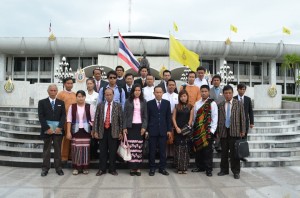
22 MPs Delegates Study Thai Parliamentary System and Public Administration
Independent Mon News Agency – With a main purpose to study the Thai Parliamentary System and Public Administration in Thailand, 22 members of parliaments delegate from Burma’s ethnic State and National parliaments arrived to Thai capital Bangkok yesterday with the support of academic civil society, Bahu Development Institute.
22 MPs delegate of 2010 elections winning parties include the representatives from many ethnic Kachin, Karen, Chin, Mon, Arakan and Shan political parties and a Burman party, National Democratic Front (NDF). Dr. Aung Naing Oo, a MP from Mon State, said to IMNA yesterday that, “there are 2 MPs from Mon State Parliament and 2 MPs from Shan State parliament. Others are from national parliament. Today we can learn the procedure of Thai senate. The Senate Chairman gave a welcome speech to us”.
He also confirmed that they have plans to learn the public administration system in Bangkok governor office today.
U Aung Thu Nyein, a responsible person from Bahu Development Institute told to IMNA that, “the MPs had been getting trainings by Myanmar E-Grass on the political system, and were trained by Bahu and Chiaing Mai University on Political Science and Public Administration. Now, they have opportunity to continuously learn Thai parliamentary and administration system to see with their eyes”.
Additionally, the 22 MPs delegate will also study the programs of Thai government’s social and economic planning in National Economics and Social Development Planning Board in Bangkok.
The MPs from ethnic political parties are from All Mon Region Democracy Party (AMDP), Chin National Party (CNP), Palon-Sawor (Karen) Democratic Party, Arakan National Progressive Party (ANPP), Shan National Democratic Party (SNDP), and National Unity and Democracy Party (Kachin State).
Bahu Development Institute and Myanmar E-Grass are the local civil society organizations, which have engaged with ethnic political parties since pre-2010 elections time.
Bahu Development Institute was founded in 2005 and it has provided various types of trainings from civic education to development training to build up the capacities of ethnic youths to involve in political activities and development projects.
http://monnews.org/?p=4032
Read more...

MPs Delegate in Thai Senate ( Photo- BNI)
He also confirmed that they have plans to learn the public administration system in Bangkok governor office today.
U Aung Thu Nyein, a responsible person from Bahu Development Institute told to IMNA that, “the MPs had been getting trainings by Myanmar E-Grass on the political system, and were trained by Bahu and Chiaing Mai University on Political Science and Public Administration. Now, they have opportunity to continuously learn Thai parliamentary and administration system to see with their eyes”.
Additionally, the 22 MPs delegate will also study the programs of Thai government’s social and economic planning in National Economics and Social Development Planning Board in Bangkok.
The MPs from ethnic political parties are from All Mon Region Democracy Party (AMDP), Chin National Party (CNP), Palon-Sawor (Karen) Democratic Party, Arakan National Progressive Party (ANPP), Shan National Democratic Party (SNDP), and National Unity and Democracy Party (Kachin State).
Bahu Development Institute and Myanmar E-Grass are the local civil society organizations, which have engaged with ethnic political parties since pre-2010 elections time.
Bahu Development Institute was founded in 2005 and it has provided various types of trainings from civic education to development training to build up the capacities of ethnic youths to involve in political activities and development projects.
http://monnews.org/?p=4032
Thousands of acres seized by local naval unit in Yebyu Township
IMNA – According to community residents, the local Mawrawaddy Navy unit and Land Record Department seized about 80,000 acres of farmland and plantation plots in Yebyu Township, Tanintharyi Division.
For years, area residents have been cultivating rubber, betel nut, cashew nut, and rice on land stretching across fifteen villages of Yebyu Township, including Mi-chaung-ai, Pyin-gyi, Sin-gu, Lae-gyi, Hmaw-gyi, Minn-thar and Sein-bone. On August 15th, officials from the Forest Department, Myanmar Perennial Crops Enterprise, and the Yebyu Township Land Record Department and Administrative Office came to Sin-gu village to survey and record details about the local land.
A Sin-gu plantation owner said, “According to the statistics collected by the township [authorities], about two thousand acres of land [in Sin-gu] has been labeled as navy land. The authorities collected information from 203 Sin-gu farmers and plantation owners. They recorded their names, how many acres of land he/she has, and [the type of land], for example, a betel nut plantation.”
According to a staff member at the administrative office, Q-2-rank Major Naing Win of the Mawrawaddy Navy Command told village administrative officials that the naval unit had applied to the resident Land Record Department in 1997, and that the contested plots belong to the navy.
Similarly, naval units previously seized land tracts on Kalar Gote and Kywe Thone Nyi Ma Islands. In 2011, the Human Rights Foundation of Monland (HURFOM) documented the confiscation without compensation of nearly 3,000 acres on Kywe Thon Nyi Ma Island in their report, “Burma’s Navy Attacks Civilians’ Livelihood.”
Also, Nai Soe Myint, a central executive member of the Mon Democracy Party, said, “Before 2000, farmland and plantation plots on Kalar Gote Island were officially recorded as the land of Mawrawaddy Navy Unit. I have heard that locals are worrying about whether they can stay there or will have to flee their land.”
There have been allegations that the navy seized land on Kalar Gote Island, located in Ye Township, Mon State, for a deep-sea port project, but official reports have yet to confirm or deny the claim.
Under military rule, state authorities seized large swaths of land in various parts of Burma. Since President Thein Sein took office in March 2011, the media has continued reporting on issues of land confiscation.
http://monnews.org/?p=4023
Read more...
For years, area residents have been cultivating rubber, betel nut, cashew nut, and rice on land stretching across fifteen villages of Yebyu Township, including Mi-chaung-ai, Pyin-gyi, Sin-gu, Lae-gyi, Hmaw-gyi, Minn-thar and Sein-bone. On August 15th, officials from the Forest Department, Myanmar Perennial Crops Enterprise, and the Yebyu Township Land Record Department and Administrative Office came to Sin-gu village to survey and record details about the local land.
A Sin-gu plantation owner said, “According to the statistics collected by the township [authorities], about two thousand acres of land [in Sin-gu] has been labeled as navy land. The authorities collected information from 203 Sin-gu farmers and plantation owners. They recorded their names, how many acres of land he/she has, and [the type of land], for example, a betel nut plantation.”
According to a staff member at the administrative office, Q-2-rank Major Naing Win of the Mawrawaddy Navy Command told village administrative officials that the naval unit had applied to the resident Land Record Department in 1997, and that the contested plots belong to the navy.
Similarly, naval units previously seized land tracts on Kalar Gote and Kywe Thone Nyi Ma Islands. In 2011, the Human Rights Foundation of Monland (HURFOM) documented the confiscation without compensation of nearly 3,000 acres on Kywe Thon Nyi Ma Island in their report, “Burma’s Navy Attacks Civilians’ Livelihood.”
Also, Nai Soe Myint, a central executive member of the Mon Democracy Party, said, “Before 2000, farmland and plantation plots on Kalar Gote Island were officially recorded as the land of Mawrawaddy Navy Unit. I have heard that locals are worrying about whether they can stay there or will have to flee their land.”
There have been allegations that the navy seized land on Kalar Gote Island, located in Ye Township, Mon State, for a deep-sea port project, but official reports have yet to confirm or deny the claim.
Under military rule, state authorities seized large swaths of land in various parts of Burma. Since President Thein Sein took office in March 2011, the media has continued reporting on issues of land confiscation.
http://monnews.org/?p=4023
Thai Environmentalists Expresses Concerns On Dawei Project
Independent Mon News Agency – In the seminar on 24th August of Friday in Thailand’s Mahidol University, ‘the relationships between Thailand and Myanmar – From Ma Ta Put to Dawei (Tavoy in Burmese)’, three Bangkok based civil society organizations, working on environment and health issues expressed their grave concerns on environmental and health impacts from Dawei deep seaport and industrial estate development project to Thai people near Thailand-Burma border and Burma’s ethnic fishing and farming communities.
A half-day seminar was arranged by academics from Environment and Resources Studies department of Mahidol University (Salaya Campus) and three civil society organizations, Ecological Alert and Recovery – Thailnd, Healthy Public Policy – Thailand, and Towards Ecological Recovery and Regional Alliance (TERRA).
Chairman of TERRA, Mr.. Virawat Thiraprasat, said in the panel discussion, “the local people have a very simple economy, fishing and farming. Why we should not promote these economies, and why Thai investors put heavy industries like steel factories, petrochemical industries, which are never benefiting to the local people”.
He and other panelists on the environment have pointed out that the Thai investors have chosen the Dawei Project to avoid strong local opposition to expansion of industry zone, especially petrochemical industries zone, in the South and in Map Ta Phut, southeast of Thailand.
However, a Thai authority from National Economic and Social Planning Department, Mrs. Potjanee Untarokuenyar confirmed in the panel session that ‘Thai investors especially Italia-Thai Development (ITD) Company will continuously invest billions of dollars in Dawei project for the benefits of both Thai and Burmese (Myanmar) people’.
She also said that the Thai government will support the ITD as a Thai investor, which received a great contract from Myanmar government as a main developer in Burma. He also added Thai and Burmese government agreed to set up ‘temporary border point’ at Puu Nam Ron, from which ITD has been building a road to Dawei deep seaport and industry zone.
But the environmentalists have expressed that the dam construction and dirty petrochemical zones will seriously impacts the livelihood of the local people, wildlife, forests and water resources in the area. They said that the Burmese people have no strong environment laws to protect their resources and health, and the investors may take advantages to invest dirty and heavy industries in the country like Burma.
Kanchanaburi and Nonthaburi district residents in central and western part of Thailand, also questioned the impacts of motorways from Bang Yai, near Bangkok, which pass through Kanchanaburi Province, reached to Puu Nam Ron border point. The resident worried for their communities because their properties on the route of motorways will be taken with compensation costs, but they have more concerns on the transports of toxic materials by trucks passing near their houses. They also said that there will be a serious pollution on these roads.
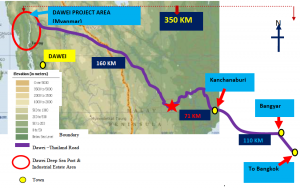
Thai government’s Transport Department plans to build a 170 kilometers long motorway from Bangkok to the border with Burma, and then ITD is building 160 kilometers long road from the border to Dawei project site.
The Thai government and Burmese government led by President U Thein Sein re-affirmed the Memorandum of Understanding (MoU) when the Burmese president paid for a 3-days visit in the 3rd week of July to Bangkok. He was also shown the Laem Chabang Port and Laem Chabang Industrial Estate in eastern Chon Buri by Thai authorities to inspire him into extending full political support to the Thai-invested Dawei project in Myanmar’s southern town of Dawei.
http://monnews.org/?p=4028
Read more...

A planned Bangkok-Dawei motor in map
Chairman of TERRA, Mr.. Virawat Thiraprasat, said in the panel discussion, “the local people have a very simple economy, fishing and farming. Why we should not promote these economies, and why Thai investors put heavy industries like steel factories, petrochemical industries, which are never benefiting to the local people”.
He and other panelists on the environment have pointed out that the Thai investors have chosen the Dawei Project to avoid strong local opposition to expansion of industry zone, especially petrochemical industries zone, in the South and in Map Ta Phut, southeast of Thailand.
However, a Thai authority from National Economic and Social Planning Department, Mrs. Potjanee Untarokuenyar confirmed in the panel session that ‘Thai investors especially Italia-Thai Development (ITD) Company will continuously invest billions of dollars in Dawei project for the benefits of both Thai and Burmese (Myanmar) people’.

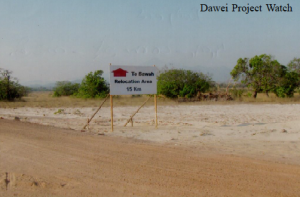
A road by ITD in Dawei Project site
But the environmentalists have expressed that the dam construction and dirty petrochemical zones will seriously impacts the livelihood of the local people, wildlife, forests and water resources in the area. They said that the Burmese people have no strong environment laws to protect their resources and health, and the investors may take advantages to invest dirty and heavy industries in the country like Burma.
Kanchanaburi and Nonthaburi district residents in central and western part of Thailand, also questioned the impacts of motorways from Bang Yai, near Bangkok, which pass through Kanchanaburi Province, reached to Puu Nam Ron border point. The resident worried for their communities because their properties on the route of motorways will be taken with compensation costs, but they have more concerns on the transports of toxic materials by trucks passing near their houses. They also said that there will be a serious pollution on these roads.
Thai government’s Transport Department plans to build a 170 kilometers long motorway from Bangkok to the border with Burma, and then ITD is building 160 kilometers long road from the border to Dawei project site.
The Thai government and Burmese government led by President U Thein Sein re-affirmed the Memorandum of Understanding (MoU) when the Burmese president paid for a 3-days visit in the 3rd week of July to Bangkok. He was also shown the Laem Chabang Port and Laem Chabang Industrial Estate in eastern Chon Buri by Thai authorities to inspire him into extending full political support to the Thai-invested Dawei project in Myanmar’s southern town of Dawei.
http://monnews.org/?p=4028
Thursday, August 16, 2012
Interview with the Mon National Democratic Front (MNDF)
IMNA: It is known that the MNDF will register soon, so I would like to know the future plans of the party?
Nai Tin Aung (Vice Chairman 1): After the coming by-election, the MNDF will register. Either we can register the party with the present name or we can do registration with another name. IMNA: The MNDF has been trying to unite with All Mon Regions Democracy Party (AMDP). Can you explain about that, please?
Nai Tin Aung (Vice Chairman 1): We would welcome that situation, indeed. We must unite. All Mon should be in a union. It is not good to separate into two groups. The purpose of uniting is the freedom of Mon nationals. We must unite if we really intend to bring about national freedom.
IMNA: The MNDF said it could not accept the 2008 constitution. How should this constitution be amended?
Nai Tin Aung (Vice Chairman 1): According to the current political situation, amending the 2008 constitution is possible only in the Hluttaw(Parliament), not outside.
Currently, it can’t easily be amended as the Union Solidarity and Development Party (USDP) dominates the Hluttaw. Even if Daw Aung San Suu Kyi win all the seats being contested in this by-election, those seats are under 10% of all the seats in the Hluttaw. However, the government itself knows the current situation in Burma. Moreover, Daw Aung San Suu Kyi needs to be in the Hluttaw and the ethnic parties should amend their policies which are not compatible with democraticprinciples.Regarding ethnic issues, we should make some changes to meet our needs after negotiations with the government.
Even if some amendments can’t be made now, after the 2015 election, we can do them in the Hluttaw. The Karen Leader Saw Ba Oo Gyi said that the rights of each ethnic group must be equal. If a Burman gets one kyat, a Karen must get one kyat too.Now, all the ethnics are at rock bottom. We must change this situation. Even the constitution of the Union has to be amended. We can live together for a long time only when the Union of States is the real union based the unity of all ethnic people. We can also gain peace forever, which is beneficial.
Please imagine Mon State in the Union of States. That Mon State stretches out from Sit-taung to Ye Townships. We want a Mon State which has its own power. Only in this way, can the problem of ethnic equality in Burma be solved. We demand powerful states for all ethic people, not only for Mon State. The Chairman (Nai NgweThein) recently said that we have been demanding a “federal” union. Regarding this word, (I want to say that) General Nay Win created a fear of “federal”. In reality, the federal system is not the one to be afraid of. It is really lovely. Daw Aung San Suu Kyi has also accepted the federal system.
IMNA: The New Mon State Party (NMSP) is negotiating with the government. As the NMDF, would you like to discuss the current political situation with the NMSP?
Nai Tin Aung (Vice Chairman 1): The NMSP and we are different. We are an unarmed domestic organization but the NMSP is an armed political party. If all armed groups in the whole Burma are organized to run under the constitution of the Union, the NMSP must contribute to the political process. I mean the armed group and the political party must be separated. The armed group has to go according to its own purpose – the defense services. The party must be operated by political policies. If we reach this turning point, the MNDF and the NMSP can negotiate. According to the current situation, the negotiation can’t happen.
IMNA: Now, Mon nationals are interested in the union of the two Mon (political) parties. According to the current situation, what are the challenges to havingsuch a union?
NaiNgweThein (Chairman): We have to try every way to unite the two parties(MNDF and AMDP). It can’t be said exactly when we will be successful. We have been negotiating with each other and we need time. If our party is registered, we will organize all ethnic groups to develop an alliance. Daw Aung San Suu Kyi has also accepted this idea. We must try to achieve this.
IMNA: Recently, some Mon armed groups gave up their weapons to the government. You said that all Mon groups should be united into one, so as an agent of peace, are you able to organize these small groups for the peace of Mon State?
Nai Tin Aung (Vice Chairman 1): Most of those small groups splintered from the NMSP. Our party is not an armed one. (Therefore,) it is impossible for us to organize them. However, I think it is more possible for the NMSP itself to re-organize them.
IMNA: What’s your opinion on this issue?
Nai Tin Aung (Vice Chairman 1): Those groups broke the disciplines of the NMSP and splintered from the party. They are small groups, which have already been punished by the NMSP. They are not strong. I heard an update that Nai Bin’s group had surrendered, but there is another group left. Today, the NMSP has gained a peace agreement with the government, so after presenting to the state government, it can requestto re-unite with these small groups.
The pre-ceremony of the 90th birthday of NaiNgweThein, the Chairman of the MNDF, was held in the Mon Dahmma Hall of Moulmein,Mon state on March 11 and a press conference was also held. Together with the Yangon Times, Eleven News, Favorite, the Myanmar Post, Open News, Express Time, Myawaddy, Yangon Press International, Myanmar Post Global and the Voice of Mon Journals, IMNA conducted an interview. – Editor
...................
http://monnews.org/?p=3777
Read more...

the press conference of the Mon National Democratic Front (MNDF)
Nai Tin Aung (Vice Chairman 1): We would welcome that situation, indeed. We must unite. All Mon should be in a union. It is not good to separate into two groups. The purpose of uniting is the freedom of Mon nationals. We must unite if we really intend to bring about national freedom.
IMNA: The MNDF said it could not accept the 2008 constitution. How should this constitution be amended?
Nai Tin Aung (Vice Chairman 1): According to the current political situation, amending the 2008 constitution is possible only in the Hluttaw(Parliament), not outside.
Currently, it can’t easily be amended as the Union Solidarity and Development Party (USDP) dominates the Hluttaw. Even if Daw Aung San Suu Kyi win all the seats being contested in this by-election, those seats are under 10% of all the seats in the Hluttaw. However, the government itself knows the current situation in Burma. Moreover, Daw Aung San Suu Kyi needs to be in the Hluttaw and the ethnic parties should amend their policies which are not compatible with democraticprinciples.Regarding ethnic issues, we should make some changes to meet our needs after negotiations with the government.
Even if some amendments can’t be made now, after the 2015 election, we can do them in the Hluttaw. The Karen Leader Saw Ba Oo Gyi said that the rights of each ethnic group must be equal. If a Burman gets one kyat, a Karen must get one kyat too.Now, all the ethnics are at rock bottom. We must change this situation. Even the constitution of the Union has to be amended. We can live together for a long time only when the Union of States is the real union based the unity of all ethnic people. We can also gain peace forever, which is beneficial.
Please imagine Mon State in the Union of States. That Mon State stretches out from Sit-taung to Ye Townships. We want a Mon State which has its own power. Only in this way, can the problem of ethnic equality in Burma be solved. We demand powerful states for all ethic people, not only for Mon State. The Chairman (Nai NgweThein) recently said that we have been demanding a “federal” union. Regarding this word, (I want to say that) General Nay Win created a fear of “federal”. In reality, the federal system is not the one to be afraid of. It is really lovely. Daw Aung San Suu Kyi has also accepted the federal system.
IMNA: The New Mon State Party (NMSP) is negotiating with the government. As the NMDF, would you like to discuss the current political situation with the NMSP?
Nai Tin Aung (Vice Chairman 1): The NMSP and we are different. We are an unarmed domestic organization but the NMSP is an armed political party. If all armed groups in the whole Burma are organized to run under the constitution of the Union, the NMSP must contribute to the political process. I mean the armed group and the political party must be separated. The armed group has to go according to its own purpose – the defense services. The party must be operated by political policies. If we reach this turning point, the MNDF and the NMSP can negotiate. According to the current situation, the negotiation can’t happen.
IMNA: Now, Mon nationals are interested in the union of the two Mon (political) parties. According to the current situation, what are the challenges to havingsuch a union?
NaiNgweThein (Chairman): We have to try every way to unite the two parties(MNDF and AMDP). It can’t be said exactly when we will be successful. We have been negotiating with each other and we need time. If our party is registered, we will organize all ethnic groups to develop an alliance. Daw Aung San Suu Kyi has also accepted this idea. We must try to achieve this.
IMNA: Recently, some Mon armed groups gave up their weapons to the government. You said that all Mon groups should be united into one, so as an agent of peace, are you able to organize these small groups for the peace of Mon State?
Nai Tin Aung (Vice Chairman 1): Most of those small groups splintered from the NMSP. Our party is not an armed one. (Therefore,) it is impossible for us to organize them. However, I think it is more possible for the NMSP itself to re-organize them.
IMNA: What’s your opinion on this issue?
Nai Tin Aung (Vice Chairman 1): Those groups broke the disciplines of the NMSP and splintered from the party. They are small groups, which have already been punished by the NMSP. They are not strong. I heard an update that Nai Bin’s group had surrendered, but there is another group left. Today, the NMSP has gained a peace agreement with the government, so after presenting to the state government, it can requestto re-unite with these small groups.
The pre-ceremony of the 90th birthday of NaiNgweThein, the Chairman of the MNDF, was held in the Mon Dahmma Hall of Moulmein,Mon state on March 11 and a press conference was also held. Together with the Yangon Times, Eleven News, Favorite, the Myanmar Post, Open News, Express Time, Myawaddy, Yangon Press International, Myanmar Post Global and the Voice of Mon Journals, IMNA conducted an interview. – Editor
...................
http://monnews.org/?p=3777
Sunday, August 12, 2012
Interview with the Mon National Democratic Front (MNDF)
Categories :
IMNA: It is known that the MNDF will register soon, so I would like to know the future plans of the party?
Nai Tin Aung (Vice Chairman 1): After the coming by-election, the MNDF will register. Either we can register the party with the present name or we can do registration with another name. IMNA: The MNDF has been trying to unite with All Mon Regions Democracy Party (AMDP). Can you explain about that, please?
Nai Tin Aung (Vice Chairman 1): We would welcome that situation, indeed. We must unite. All Mon should be in a union. It is not good to separate into two groups. The purpose of uniting is the freedom of Mon nationals. We must unite if we really intend to bring about national freedom.
IMNA: The MNDF said it could not accept the 2008 constitution. How should this constitution be amended?
Nai Tin Aung (Vice Chairman 1): According to the current political situation, amending the 2008 constitution is possible only in the Hluttaw(Parliament), not outside.
Currently, it can’t easily be amended as the Union Solidarity and Development Party (USDP) dominates the Hluttaw. Even if Daw Aung San Suu Kyi win all the seats being contested in this by-election, those seats are under 10% of all the seats in the Hluttaw. However, the government itself knows the current situation in Burma. Moreover, Daw Aung San Suu Kyi needs to be in the Hluttaw and the ethnic parties should amend their policies which are not compatible with democraticprinciples.Regarding ethnic issues, we should make some changes to meet our needs after negotiations with the government.
Even if some amendments can’t be made now, after the 2015 election, we can do them in the Hluttaw. The Karen Leader Saw Ba Oo Gyi said that the rights of each ethnic group must be equal. If a Burman gets one kyat, a Karen must get one kyat too.Now, all the ethnics are at rock bottom. We must change this situation. Even the constitution of the Union has to be amended. We can live together for a long time only when the Union of States is the real union based the unity of all ethnic people. We can also gain peace forever, which is beneficial.
Please imagine Mon State in the Union of States. That Mon State stretches out from Sit-taung to Ye Townships. We want a Mon State which has its own power. Only in this way, can the problem of ethnic equality in Burma be solved. We demand powerful states for all ethic people, not only for Mon State. The Chairman (Nai NgweThein) recently said that we have been demanding a “federal” union. Regarding this word, (I want to say that) General Nay Win created a fear of “federal”. In reality, the federal system is not the one to be afraid of. It is really lovely. Daw Aung San Suu Kyi has also accepted the federal system.
IMNA: The New Mon State Party (NMSP) is negotiating with the government. As the NMDF, would you like to discuss the current political situation with the NMSP?
Nai Tin Aung (Vice Chairman 1): The NMSP and we are different. We are an unarmed domestic organization but the NMSP is an armed political party. If all armed groups in the whole Burma are organized to run under the constitution of the Union, the NMSP must contribute to the political process. I mean the armed group and the political party must be separated. The armed group has to go according to its own purpose – the defense services. The party must be operated by political policies. If we reach this turning point, the MNDF and the NMSP can negotiate. According to the current situation, the negotiation can’t happen.
IMNA: Now, Mon nationals are interested in the union of the two Mon (political) parties. According to the current situation, what are the challenges to havingsuch a union?
NaiNgweThein (Chairman): We have to try every way to unite the two parties(MNDF and AMDP). It can’t be said exactly when we will be successful. We have been negotiating with each other and we need time. If our party is registered, we will organize all ethnic groups to develop an alliance. Daw Aung San Suu Kyi has also accepted this idea. We must try to achieve this.
IMNA: Recently, some Mon armed groups gave up their weapons to the government. You said that all Mon groups should be united into one, so as an agent of peace, are you able to organize these small groups for the peace of Mon State?
Nai Tin Aung (Vice Chairman 1): Most of those small groups splintered from the NMSP. Our party is not an armed one. (Therefore,) it is impossible for us to organize them. However, I think it is more possible for the NMSP itself to re-organize them.
IMNA: What’s your opinion on this issue?
Nai Tin Aung (Vice Chairman 1): Those groups broke the disciplines of the NMSP and splintered from the party. They are small groups, which have already been punished by the NMSP. They are not strong. I heard an update that Nai Bin’s group had surrendered, but there is another group left. Today, the NMSP has gained a peace agreement with the government, so after presenting to the state government, it can requestto re-unite with these small groups.
The pre-ceremony of the 90th birthday of NaiNgweThein, the Chairman of the MNDF, was held in the Mon Dahmma Hall of Moulmein,Mon state on March 11 and a press conference was also held. Together with the Yangon Times, Eleven News, Favorite, the Myanmar Post, Open News, Express Time, Myawaddy, Yangon Press International, Myanmar Post Global and the Voice of Mon Journals, IMNA conducted an interview. – Editor
nownew
Read more...

the press conference of the Mon National Democratic Front (MNDF)
Nai Tin Aung (Vice Chairman 1): We would welcome that situation, indeed. We must unite. All Mon should be in a union. It is not good to separate into two groups. The purpose of uniting is the freedom of Mon nationals. We must unite if we really intend to bring about national freedom.
IMNA: The MNDF said it could not accept the 2008 constitution. How should this constitution be amended?
Nai Tin Aung (Vice Chairman 1): According to the current political situation, amending the 2008 constitution is possible only in the Hluttaw(Parliament), not outside.
Currently, it can’t easily be amended as the Union Solidarity and Development Party (USDP) dominates the Hluttaw. Even if Daw Aung San Suu Kyi win all the seats being contested in this by-election, those seats are under 10% of all the seats in the Hluttaw. However, the government itself knows the current situation in Burma. Moreover, Daw Aung San Suu Kyi needs to be in the Hluttaw and the ethnic parties should amend their policies which are not compatible with democraticprinciples.Regarding ethnic issues, we should make some changes to meet our needs after negotiations with the government.
Even if some amendments can’t be made now, after the 2015 election, we can do them in the Hluttaw. The Karen Leader Saw Ba Oo Gyi said that the rights of each ethnic group must be equal. If a Burman gets one kyat, a Karen must get one kyat too.Now, all the ethnics are at rock bottom. We must change this situation. Even the constitution of the Union has to be amended. We can live together for a long time only when the Union of States is the real union based the unity of all ethnic people. We can also gain peace forever, which is beneficial.
Please imagine Mon State in the Union of States. That Mon State stretches out from Sit-taung to Ye Townships. We want a Mon State which has its own power. Only in this way, can the problem of ethnic equality in Burma be solved. We demand powerful states for all ethic people, not only for Mon State. The Chairman (Nai NgweThein) recently said that we have been demanding a “federal” union. Regarding this word, (I want to say that) General Nay Win created a fear of “federal”. In reality, the federal system is not the one to be afraid of. It is really lovely. Daw Aung San Suu Kyi has also accepted the federal system.
IMNA: The New Mon State Party (NMSP) is negotiating with the government. As the NMDF, would you like to discuss the current political situation with the NMSP?
Nai Tin Aung (Vice Chairman 1): The NMSP and we are different. We are an unarmed domestic organization but the NMSP is an armed political party. If all armed groups in the whole Burma are organized to run under the constitution of the Union, the NMSP must contribute to the political process. I mean the armed group and the political party must be separated. The armed group has to go according to its own purpose – the defense services. The party must be operated by political policies. If we reach this turning point, the MNDF and the NMSP can negotiate. According to the current situation, the negotiation can’t happen.
IMNA: Now, Mon nationals are interested in the union of the two Mon (political) parties. According to the current situation, what are the challenges to havingsuch a union?
NaiNgweThein (Chairman): We have to try every way to unite the two parties(MNDF and AMDP). It can’t be said exactly when we will be successful. We have been negotiating with each other and we need time. If our party is registered, we will organize all ethnic groups to develop an alliance. Daw Aung San Suu Kyi has also accepted this idea. We must try to achieve this.
IMNA: Recently, some Mon armed groups gave up their weapons to the government. You said that all Mon groups should be united into one, so as an agent of peace, are you able to organize these small groups for the peace of Mon State?
Nai Tin Aung (Vice Chairman 1): Most of those small groups splintered from the NMSP. Our party is not an armed one. (Therefore,) it is impossible for us to organize them. However, I think it is more possible for the NMSP itself to re-organize them.
IMNA: What’s your opinion on this issue?
Nai Tin Aung (Vice Chairman 1): Those groups broke the disciplines of the NMSP and splintered from the party. They are small groups, which have already been punished by the NMSP. They are not strong. I heard an update that Nai Bin’s group had surrendered, but there is another group left. Today, the NMSP has gained a peace agreement with the government, so after presenting to the state government, it can requestto re-unite with these small groups.
The pre-ceremony of the 90th birthday of NaiNgweThein, the Chairman of the MNDF, was held in the Mon Dahmma Hall of Moulmein,Mon state on March 11 and a press conference was also held. Together with the Yangon Times, Eleven News, Favorite, the Myanmar Post, Open News, Express Time, Myawaddy, Yangon Press International, Myanmar Post Global and the Voice of Mon Journals, IMNA conducted an interview. – Editor
nownew
A 2nd Panglong Conference
Categories :
Panorkkyar, Rai Maraoh: Question: : What is your [the New Mon State Party (NMSP)] view on the call for a second Panglong conference?
Answer: : The NMSP welcomes a second Panglong conference because the second Panglong conference is based on democracy and self-determination, and also national reconciliation.
Question: : How would you respond to claims that a 2nd Panglong conference would do more harm than good?
Answer: : The Burmese regime governs through Burmanization and through a dictatorship. The process of a Panglong conference is completely opposed to the Burmese government’s methods for rule so they would have to make a claim like that.
Question: : What is the Panglong spirit and what does it mean?
Answer: : The Panglong spirit is the determination for independence and to bring together the ethnic groups and the Burmese in pursuit of self-determination and sticking together to bring about a federal union.
Question: : Will the 2nd Panglong have the strength to reconcile the ethnic people?
Answer: : The first Panglong was quite successful and the second will also bring the country closer to democracy and a reconciling of the ethnic people’s issues. The second Panglong conference will be good for the ethnic groups.
Question: : What was implemented by the first Panglong and what benefits do people hope to achieve from the second?
Answer: : During the 1st Panglong conference, when General Aung San and the Anti-Fascist People’s Freedom League (AFPFL) asked for independence from Britain, Britain responded by asking if the ethnic groups would receive independence as well? The British explained that Burma will receive independence if Burma gives independence to the ethnic groups as well. The 1st Panglong was a catalyst for independence. That was the main benefit of the Panglong conference. If the second Panglong is undertaken and is successful, all ethnic groups will benefit, as well as the Burmese.
Question: : What is the challenge to hold the second Panglong, and why?
Answer: : The main challenge of the second Panglong is the Burmese regime because currently the democracy groups and the ethnic groups are in favor of holding a 2nd Panglong conference.
Question: : How far would the NMSP involve itself in a 2nd Panglong conference?
Answer: : Most people concerned with a 2nd Panglong conference are politicians. Now, the NMSP is no longer holding a ceasefire with the Burmese, so it’s harder for the NMSP to be involved in different activities. But, if allowed, the NMSP will participate in a 2nd Panglong conference. It will depend on how the 2nd Panglong is set up and which groups become involved.
Question: : What would a 2nd Panglong Conference mean for the Mon people?
Answer: : Mainly, the NMSP is fighting with the aims of advocating for Mon people and realization of self-determination for Mon people. A 2nd Panglong conference would also strive for these goals. A 2nd Panglong would benefit the ethnic groups, though not just them, but the whole country as well.
Question: : The Mon weren’t included in the 1st Panglong conference, but they did join in the Taung Gyi Pin Lone. Will they participate in the second Panglong conference?
Answer: : The Mon, Arakan, and the Karen did not participate in the 1st Panglong conference, but one article from the 1st conference stated that all ethnic groups, even those who didn’t attend the Panglong conference, would be afforded the rights set out for them in the 1st Panglong conference. That’s why we hope that the 2nd Panglong conference will implement the rights of the ethnic groups just like the 1st. Even if we weren’t involved in the first Panglong, the Panglong conferences always keep ethnic goals in its main objectives.
Question: : What does NMSP want to tell Mon people about the 2nd Panglong conference?
Answer: : To solve the political situation in Burma peacefully, since 1994 the UN encouraged Burma to have tripartite dialogue between the ethnic groups, democracy groups and the Burmese government to solve the political conflict in Burma. A second Panlong conference will also involve these three groups and it will be good to implement it. Burma received independence more than 60 years ago, but the country degenerated due to the Burmese regime’s takeover and its subsequent Burmanization. The challenge for the Panglong conference is the Burmese regime. If the Burmese regime would change its mind and cooperate then the situation in Burma would be peaceful and the current political conflict will fade. This is why the second Panglong conference would be meaningful for both Burmese and ethnic groups if it is implemented.
Read more...

NMSP's executive committee Nai Tala Nyi
Question: : How would you respond to claims that a 2nd Panglong conference would do more harm than good?
Answer: : The Burmese regime governs through Burmanization and through a dictatorship. The process of a Panglong conference is completely opposed to the Burmese government’s methods for rule so they would have to make a claim like that.
Question: : What is the Panglong spirit and what does it mean?
Answer: : The Panglong spirit is the determination for independence and to bring together the ethnic groups and the Burmese in pursuit of self-determination and sticking together to bring about a federal union.
Question: : Will the 2nd Panglong have the strength to reconcile the ethnic people?
Answer: : The first Panglong was quite successful and the second will also bring the country closer to democracy and a reconciling of the ethnic people’s issues. The second Panglong conference will be good for the ethnic groups.
Question: : What was implemented by the first Panglong and what benefits do people hope to achieve from the second?
Answer: : During the 1st Panglong conference, when General Aung San and the Anti-Fascist People’s Freedom League (AFPFL) asked for independence from Britain, Britain responded by asking if the ethnic groups would receive independence as well? The British explained that Burma will receive independence if Burma gives independence to the ethnic groups as well. The 1st Panglong was a catalyst for independence. That was the main benefit of the Panglong conference. If the second Panglong is undertaken and is successful, all ethnic groups will benefit, as well as the Burmese.
Question: : What is the challenge to hold the second Panglong, and why?
Answer: : The main challenge of the second Panglong is the Burmese regime because currently the democracy groups and the ethnic groups are in favor of holding a 2nd Panglong conference.
Question: : How far would the NMSP involve itself in a 2nd Panglong conference?
Answer: : Most people concerned with a 2nd Panglong conference are politicians. Now, the NMSP is no longer holding a ceasefire with the Burmese, so it’s harder for the NMSP to be involved in different activities. But, if allowed, the NMSP will participate in a 2nd Panglong conference. It will depend on how the 2nd Panglong is set up and which groups become involved.
Question: : What would a 2nd Panglong Conference mean for the Mon people?
Answer: : Mainly, the NMSP is fighting with the aims of advocating for Mon people and realization of self-determination for Mon people. A 2nd Panglong conference would also strive for these goals. A 2nd Panglong would benefit the ethnic groups, though not just them, but the whole country as well.
Question: : The Mon weren’t included in the 1st Panglong conference, but they did join in the Taung Gyi Pin Lone. Will they participate in the second Panglong conference?
Answer: : The Mon, Arakan, and the Karen did not participate in the 1st Panglong conference, but one article from the 1st conference stated that all ethnic groups, even those who didn’t attend the Panglong conference, would be afforded the rights set out for them in the 1st Panglong conference. That’s why we hope that the 2nd Panglong conference will implement the rights of the ethnic groups just like the 1st. Even if we weren’t involved in the first Panglong, the Panglong conferences always keep ethnic goals in its main objectives.
Question: : What does NMSP want to tell Mon people about the 2nd Panglong conference?
Answer: : To solve the political situation in Burma peacefully, since 1994 the UN encouraged Burma to have tripartite dialogue between the ethnic groups, democracy groups and the Burmese government to solve the political conflict in Burma. A second Panlong conference will also involve these three groups and it will be good to implement it. Burma received independence more than 60 years ago, but the country degenerated due to the Burmese regime’s takeover and its subsequent Burmanization. The challenge for the Panglong conference is the Burmese regime. If the Burmese regime would change its mind and cooperate then the situation in Burma would be peaceful and the current political conflict will fade. This is why the second Panglong conference would be meaningful for both Burmese and ethnic groups if it is implemented.
Subscribe to:
Posts (Atom)